

























Kapikachhu (Mucuna pruriens): Traditional Use, Research & Extract Types


Kapikachhu, botanically known as Mucuna pruriens and commonly called Velvet Bean, is a leguminous plant traditionally used in wellness systems across India, Africa, and Central America. It has been extensively studied for its naturally occurring compounds, particularly L-DOPA (L-3,4-dihydroxyphenylalanine).
This guide explains:
- What Kapikachhu is
- How it has been traditionally used
- What modern research has studied
- The difference between Mucuna extracts and whole-seed powders
This content is for educational purposes only and does not provide medical advice.
What Is Kapikachhu (Mucuna pruriens)?
Kapikachhu is a tropical climbing plant whose seeds are primarily used in botanical preparations. The seeds naturally contain:
- L-DOPA (a naturally occurring amino acid)
- Alkaloids
- Flavonoids
- Proteins and fibers
Among these, L-DOPA is the primary compound measured and standardized in most Mucuna pruriens extracts.
Traditional Use of Kapikachhu
In Ayurveda and other traditional systems, Kapikachhu has been included in practices related to:
- Nervous system traditions
- Vitality and strength traditions
- Reproductive wellness traditions
- Cognitive and mental balance traditions
These traditional applications led to significant scientific interest in Mucuna pruriens seeds.
What Modern Research Has Studied
Modern research has focused primarily on Mucuna pruriens seed extracts and their L-DOPA content.
Phytochemical & L-DOPA Research
A review published in Phytotherapy Research examined the chemical composition of Mucuna pruriens, focusing on natural L-DOPA levels.
Source: Manyam et al. (2004). Phytotherapy Research.
Neurological & Botanical Studies
Research in Journal of Ethnopharmacology evaluated standardized Mucuna extracts under controlled experimental conditions.
Source: Katzenschlager et al. (2004). J Ethnopharmacol.
Traditional Use Reviews
A review in Indian Journal of Traditional Knowledge documented the classical uses of Kapikachhu in Ayurvedic literature.
Source: Shukla et al. (2010). IJTK.
These studies were conducted using standardized extracts or controlled preparations, not retail dietary supplements.
Kapikachhu Extract vs Whole Seed Powder
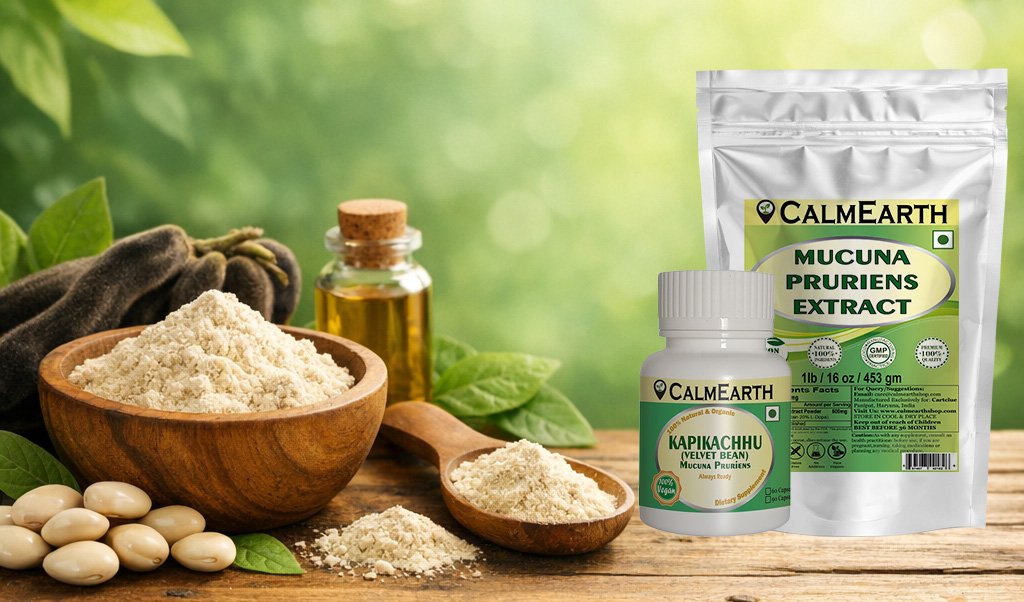
Kapikachhu is commonly available in two main forms.
Kapikachhu Extract (Standardized)
Standardized extracts are concentrated and measured for L-DOPA content, allowing consistent botanical composition.
👉 View Kapikachhu Extract Powder 20% L-dopa
👉 View Kapikachhu Extract Capsules 20% L-dopa
Kapikachhu Seed Powder
Seed powder is made from dried whole Mucuna pruriens seeds and contains the plant in its natural, un-concentrated form.
Why Standardization Matters
Most scientific studies on Mucuna pruriens use L-DOPA–standardized extracts, not whole-seed powder.
Standardization allows:
- Measurement of L-DOPA
- Batch-to-batch consistency
- Reliable botanical comparison
Important Reminder
Scientific research studies botanical extracts under controlled conditions.
Retail dietary supplements are not evaluated in the same way.
Final Thoughts
Kapikachhu (Mucuna pruriens) remains one of the most studied seed-based botanicals worldwide. Whether used as a standardized extract or a whole-seed powder, it continues to play an important role in traditional and modern botanical practices.
Compliance Disclaimer
This article is for educational purposes only.
It does not provide medical advice.
Dietary supplements are not intended to diagnose, treat, cure, or prevent any disease.