
























Centella Asiatica (Gotu Kola): What Traditional Use and Modern Research Say

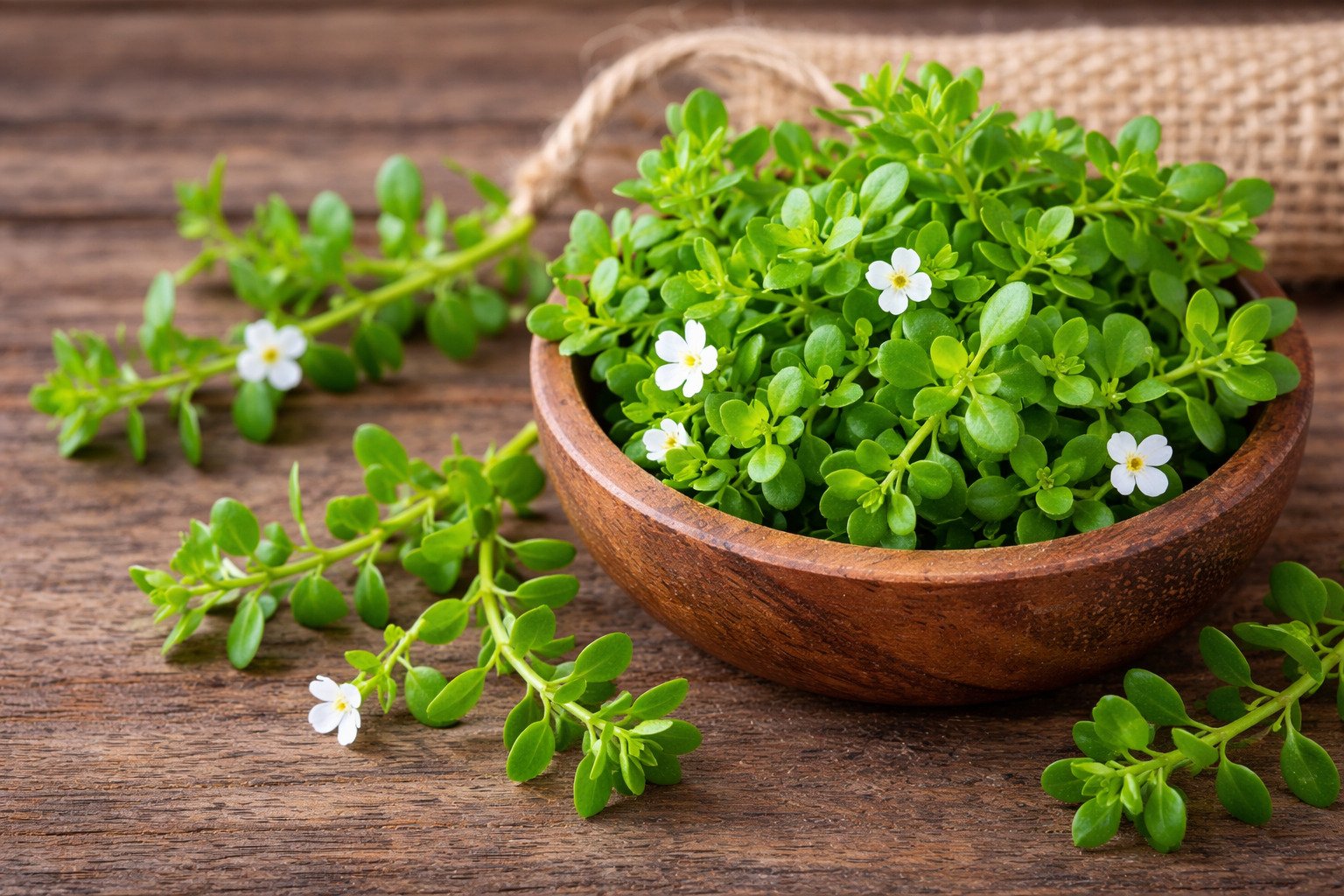
Centella Asiatica, commonly known as Gotu Kola, is a leafy botanical that has been used for centuries in traditional herbal systems. In recent years, it has also been widely studied due to its naturally occurring plant compounds, including asiaticosides, madecassosides, and triterpenoids.
This guide explains:
- What Gotu Kola is
- What research has studied
- The difference between extracts and organic whole-plant powders
- How these forms are typically used
This article is provided for educational purposes only and does not offer medical advice.
What Is Gotu Kola?
Gotu Kola (Centella Asiatica) is a creeping perennial plant native to India, Southeast Asia, and parts of Africa. It has a long history of use in Ayurvedic and Traditional Chinese Medicine as a botanical ingredient in wellness preparations.
Its key naturally occurring compounds include:
- Asiaticosides
- Madecassosides
- Asiatic acid
- Madecassic acid
These compounds are the primary focus of modern scientific research.
Traditional Use of Gotu Kola
In traditional herbal systems, Gotu Kola has been used in a variety of ways, including:
- As part of herbal teas and decoctions
- In powdered plant blends
- In fermented and dried preparations
- As an ingredient in traditional wellness formulas
These uses explain why the plant continues to be researched today.
What Modern Research Has Studied
Modern research has examined Gotu Kola primarily for its triterpenoid compounds, including asiaticosides.
Several studies have explored how standardized Gotu Kola extracts interact with:
- Antioxidant pathways
- Neurochemical signaling
- Cellular stress response
Examples include:
- Orhan, I.E. (2012). Centella asiatica: From Traditional Medicine to Modern Medicine. Evidence-Based Complementary and Alternative Medicine
- Wattanathorn et al. (2008). Positive modulation of cognition and mood in the elderly by Centella asiatica. Clinical Interventions in Aging
- Gray et al. (2016). Centella asiatica: Neuroprotective effects and antioxidant mechanisms. Phytomedicine
These studies evaluated plant extracts under controlled research conditions, not consumer products.
Gotu Kola Extract vs Organic Gotu Kola Powder
Gotu Kola products are commonly available in two main forms: extracts and organic whole-plant powders. Each serves a different purpose.
Gotu Kola Extract
Gotu Kola extracts are made by concentrating specific compounds from the plant. Many extracts are standardized, such as:
- 10% Asiaticosides
- 20% Asiaticosides
This means the level of key plant compounds is controlled for consistency between batches.
Extracts are typically used by:
- Herbal formulators
- Supplement manufacturers
- Individuals looking for a concentrated botanical ingredient
👉 View Gotu Kola Extract Powder
👉 View Gotu Kola Extract Capsules

Organic Gotu Kola Powder
Organic Gotu Kola powder is made from the whole dried plant, which is then finely milled. It contains the plant in its natural, un-concentrated form.
This form is commonly chosen by:
- Customers who prefer whole-herb ingredients
- Those following traditional herbal practices
- People who like to prepare teas, smoothies, or blends
👉 View Organic Gotu Kola Powder
👉 View Organic Gotu Kola Capsules
Why Standardization Matters
Most scientific research on Gotu Kola uses standardized extracts, not whole-plant powders. This allows researchers to:
- Measure specific compounds
- Compare results
- Maintain consistency
This is why extract products often list percentages like 20% Asiaticosides.
Choosing the Right Form
The choice between extract and organic powder depends on:
- Whether you prefer a concentrated extract or whole-plant form
- How you plan to use it (capsules, blends, teas, etc.)
- Personal preference
Both forms come from the same plant but are processed differently.
Important Reminder
Scientific studies examine plant extracts under controlled conditions.
Retail supplements are not evaluated in the same way, and individual results can vary.
Final Thoughts
Gotu Kola is one of the most studied traditional herbs, with both a long history of use and growing scientific interest. Whether used as a standardized extract or a whole-plant organic powder, it remains a popular botanical among people interested in plant-based wellness.
Compliance Disclaimer
This article is for educational purposes only.
It does not provide medical advice, diagnosis, or treatment.
Dietary supplements are not intended to diagnose, treat, cure, or prevent any disease.