





















Ginkgo Biloba: Traditional Use, Research & Standardized Extract Profile

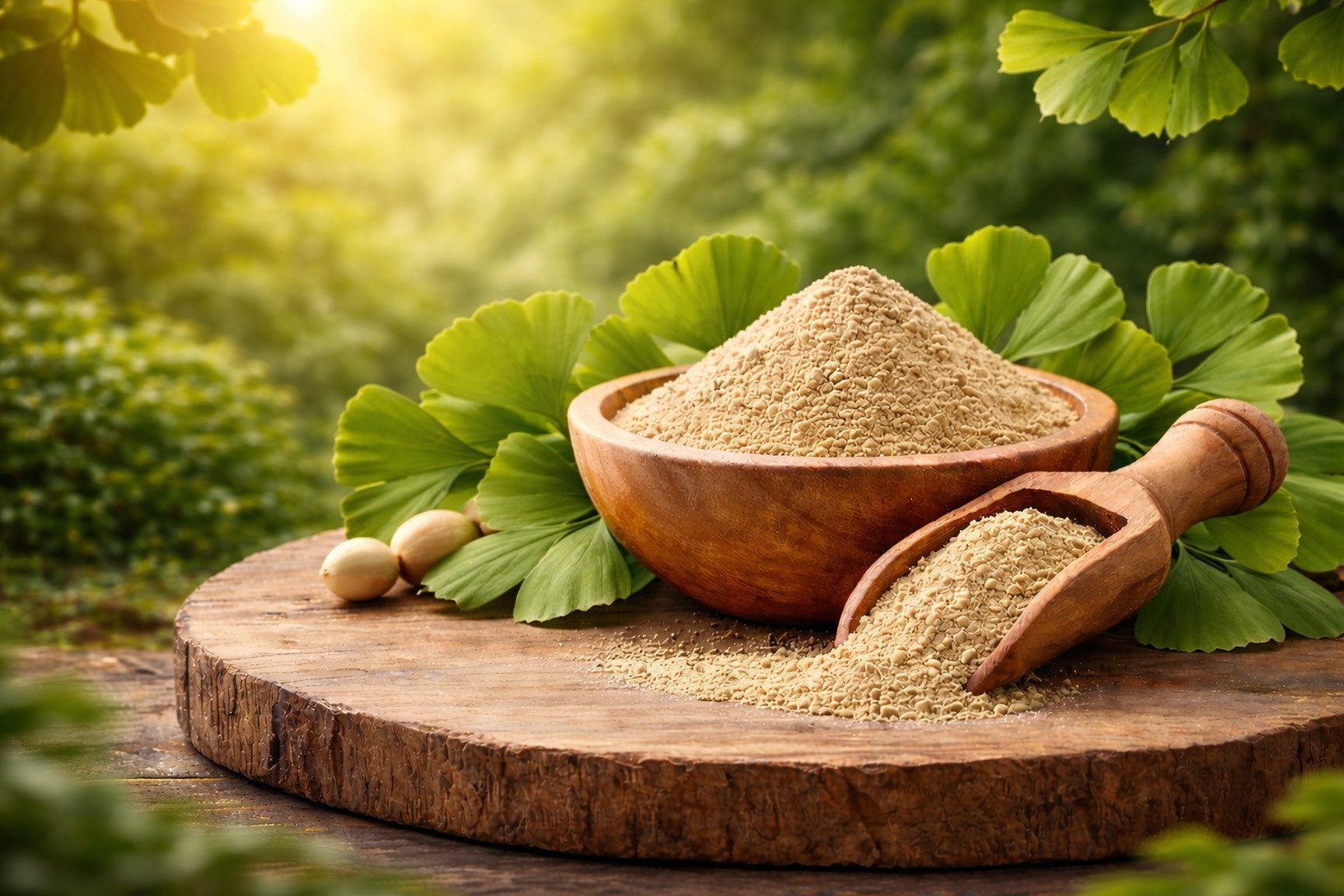
Ginkgo biloba is one of the oldest living tree species in the world, traditionally used in Chinese botanical practices for centuries. In modern herbal science, Ginkgo biloba leaf extract is among the most extensively studied botanical extracts, standardized for its naturally occurring flavonoids and terpene lactones.
This guide explains:
- What Ginkgo biloba is
- How it has been traditionally used
- What modern research has studied
- Why standardized extract ratios (24% / 6%) matter
This content is for educational purposes only and does not provide medical advice.
What Is Ginkgo Biloba?
Ginkgo biloba is a deciduous tree whose leaves are used in botanical preparations. Ginkgo leaves naturally contain:
- Flavonoid glycosides
- Terpene lactones (ginkgolides & bilobalide)
- Organic acids
- Polyphenols
In standardized extracts, flavonoids and terpene lactones are the primary compounds measured for quality and consistency.
Traditional Use of Ginkgo Biloba
In traditional Chinese practices, Ginkgo biloba has been included in formulations related to:
- Cognitive and mental balance traditions
- Circulatory wellness traditions
- Age-related wellness practices
- General vitality formulations
These traditional applications contributed to extensive modern scientific research.
What Modern Research Has Studied
Modern research on Ginkgo biloba has focused heavily on standardized leaf extracts, particularly those containing 24% flavonoids and 6% terpene lactones.
Standardized Extract Research
A review in Phytomedicine discussed the pharmacological profile of standardized Ginkgo biloba extracts (EGb 761-type), emphasizing flavonoids and terpene lactones.
Source: Smith & Luo (2004). Phytomedicine.
Cognitive & Neurological Studies
Research published in Journal of Psychopharmacology evaluated standardized Ginkgo extracts in controlled clinical and experimental settings.
Source: Kennedy et al. (2007). J Psychopharmacol.
Circulatory & Botanical Studies
A review in Planta Medica examined Ginkgo biloba leaf extract composition and standardization methods.
Source: DeFeudis (2003). Planta Medica.
These studies were conducted using standardized extracts, not raw leaf powder or retail supplements.

Ginkgo Biloba Extract vs Whole Leaf Powder
Ginkgo biloba is available in different formats, but modern research overwhelmingly uses standardized extracts.
Ginkgo Biloba Extract (Standardized)
Standardized extracts are concentrated and measured to contain:
- 24% flavonoid glycosides
- 6% terpene lactones
This ensures consistency, reliability, and research-aligned composition.
👉 View Ginkgo Biloba Extract Powder 24% / 6%
👉 View Ginkgo Biloba Extract Capsules
Whole Leaf Powder (Less Common)
Whole leaf powders contain Ginkgo leaves in natural form but are not standardized and are rarely used in research.
Why Standardization Matters
Nearly all scientific research on Ginkgo biloba relies on 24% flavonoids / 6% terpene lactone extracts.
Standardization allows:
- Reliable comparison across studies
- Consistent phytochemical composition
- Verified extract quality
Important Reminder
Scientific research studies botanical extracts under controlled conditions.
Retail dietary supplements are not evaluated in the same way.
Final Thoughts
Ginkgo biloba remains one of the most scientifically studied botanical extracts worldwide. Standardized leaf extracts with 24% flavonoids and 6% terpene lactones continue to be the benchmark for quality, research, and formulation.
Compliance Disclaimer
This article is for educational purposes only.
It does not provide medical advice.
Dietary supplements are not intended to diagnose, treat, cure, or prevent any disease.