

























Fenugreek Seed (Methi): Traditional Use, Research & Whole-Seed Powder Explained

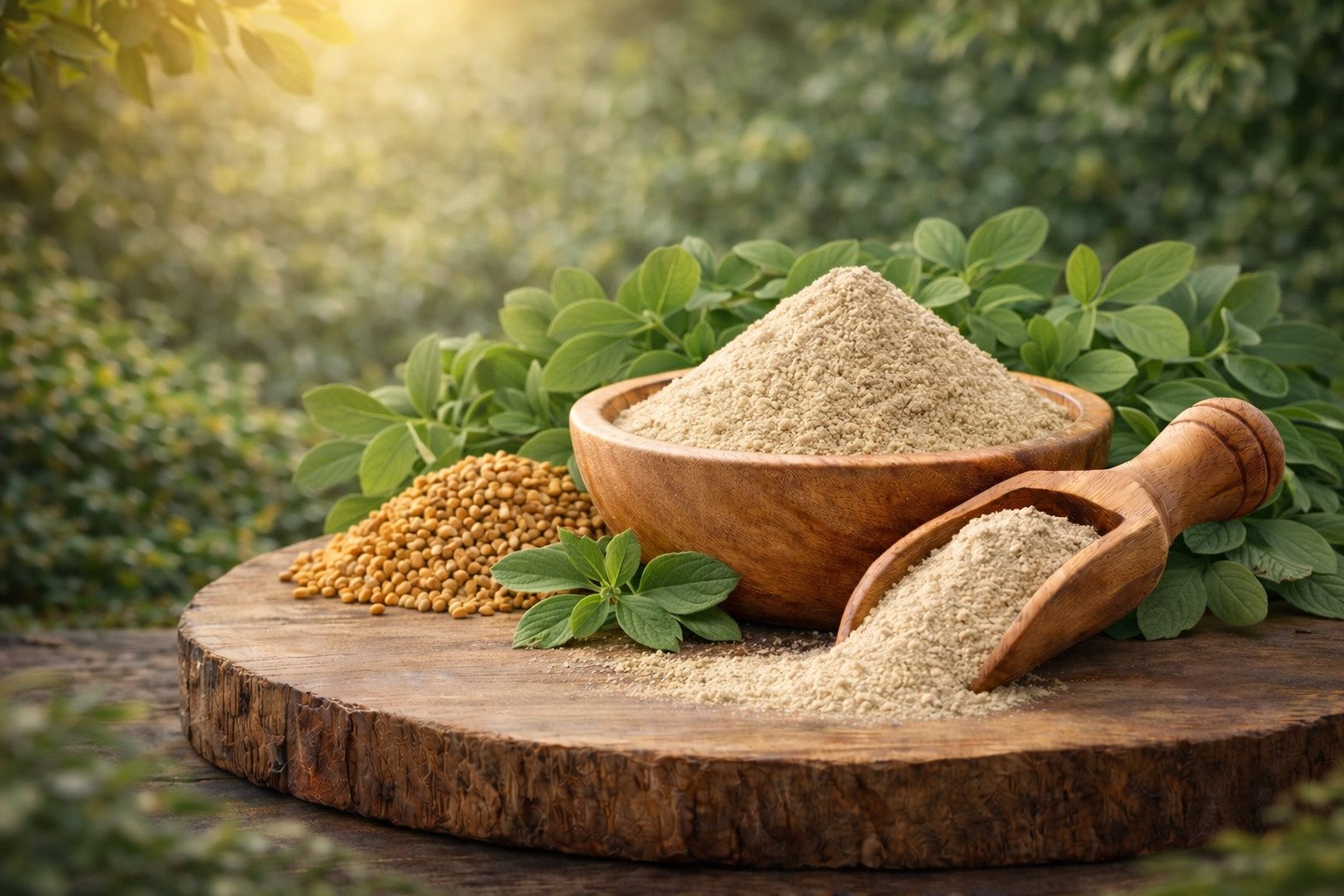
Fenugreek, commonly known as Methi and botanically identified as Trigonella foenum-graecum, is a culinary and medicinal seed traditionally used across India, the Middle East, and the Mediterranean. Unlike many herbs where extracts dominate research, Fenugreek seed is primarily studied and used in its whole or powdered form.
This guide explains:
- What Fenugreek seed is
- How it has been traditionally used
- What modern research focuses on
- Why organic whole-seed powder is not inferior to extracts
This content is for educational purposes only and does not provide medical advice.
What Is Fenugreek Seed?
Fenugreek is an annual plant whose seeds are the primary part used. Fenugreek seeds naturally contain a complex matrix of compounds, including:
- Soluble dietary fiber (galactomannan)
- Saponins
- Alkaloids (including trigonelline)
- Amino acids
- Polyphenols
These compounds work together in the whole seed — not as isolated single markers.
Traditional Use of Fenugreek (Methi)
In Ayurveda, Unani, and traditional food-based wellness systems, Fenugreek seeds have been included in practices related to:
- Digestive traditions
- Metabolic balance traditions
- Nutritional and food-based formulations
- General vitality and strength practices
Importantly, Fenugreek has historically been used as whole seeds or powder, not as concentrated extracts.
What Modern Research Has Studied
Modern research on Fenugreek overwhelmingly focuses on whole seed powder or seed preparations, not high-ratio extracts.
Nutritional & Seed-Based Research
A review in Journal of Food Science and Nutrition examined Fenugreek seed fiber, protein, and bioactive components using whole seed powder.
Source: Basch et al. (2003). J Food Sci Nutr.
Botanical & Dietary Studies
Research in Phytotherapy Research evaluated Fenugreek seed powder in controlled dietary contexts.
Source: Srinivasan (2006). Phytotherapy Research.
Food & Herbal Research
A review in Food Chemistry highlighted Fenugreek seeds as a functional food, emphasizing whole-seed composition rather than extracts.
Source: Yadav & Baquer (2014). Food Chemistry.
👉 Key Insight:
Most research uses whole seed powder, not extracts — making organic Fenugreek powder a research-aligned format, not a weaker one.
Fenugreek Powder vs Extract (Important Clarification)
Unlike many herbs:
- Fenugreek does NOT rely on one single “active compound”
- Its benefits come from fiber + saponins + alkaloids + nutrients acting together
Organic Fenugreek Seed Powder
- Full-spectrum seed matrix
- Reflects traditional and dietary use
- Matches most scientific study formats
- Preferred for long-term and food-based use
Fenugreek Extracts (Less Common)
- Concentrate selected compounds only
- Do not represent traditional usage
- Rarely used in mainstream Fenugreek research
👉 Conclusion:
For Fenugreek, organic whole-seed powder is the gold standard, not an inferior option.
Why Organic Matters for Fenugreek
Because Fenugreek is often consumed as a food-like botanical, organic sourcing is especially important.
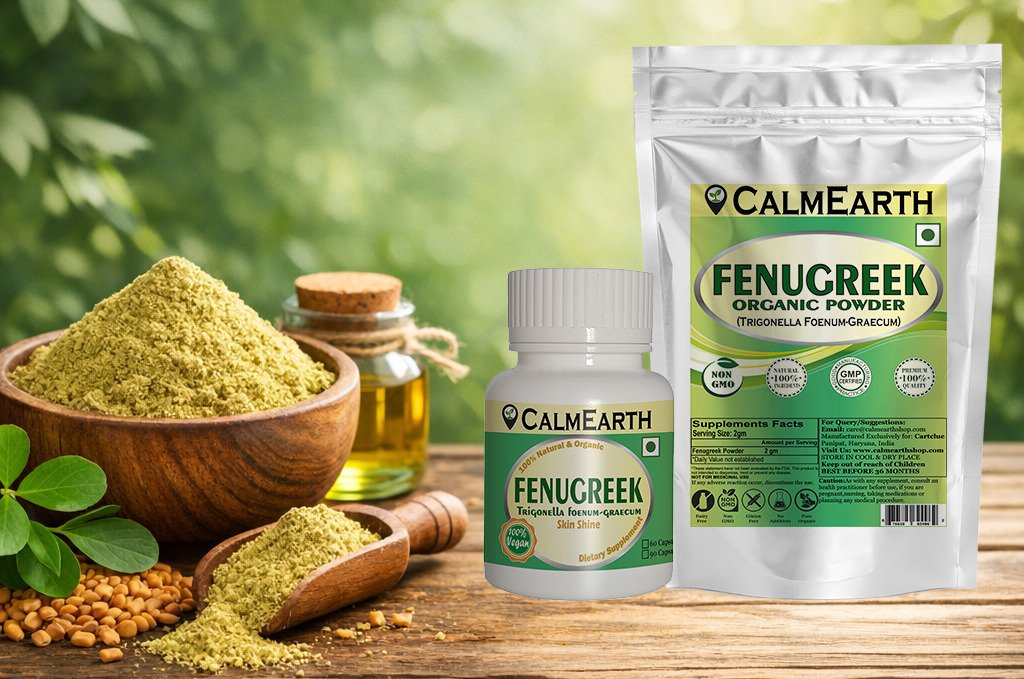
Organic Fenugreek powder ensures:
- No synthetic pesticide residues
- Cleaner dietary ingredient profile
- Better alignment with traditional use
- 👉 View Fenugreek Seed Organic Powder
- 👉 View Fenugreek Seed Organic Capsules
Important Reminder
Scientific research studies Fenugreek in food and botanical contexts.
Retail supplements are not evaluated in the same way.
Final Thoughts
Fenugreek (Trigonella foenum-graecum) is a unique botanical where whole seed powder is not only traditional but scientifically validated. Organic Fenugreek seed powder represents a complete, full-spectrum, and research-aligned format, not a compromise.
Compliance Disclaimer
This article is for educational purposes only.
It does not provide medical advice.
Dietary supplements are not intended to diagnose, treat, cure, or prevent any disease.