






Hibiscus Flower (Hibiscus sabdariffa): Whole-Flower Use & Why Organic Powder Matters

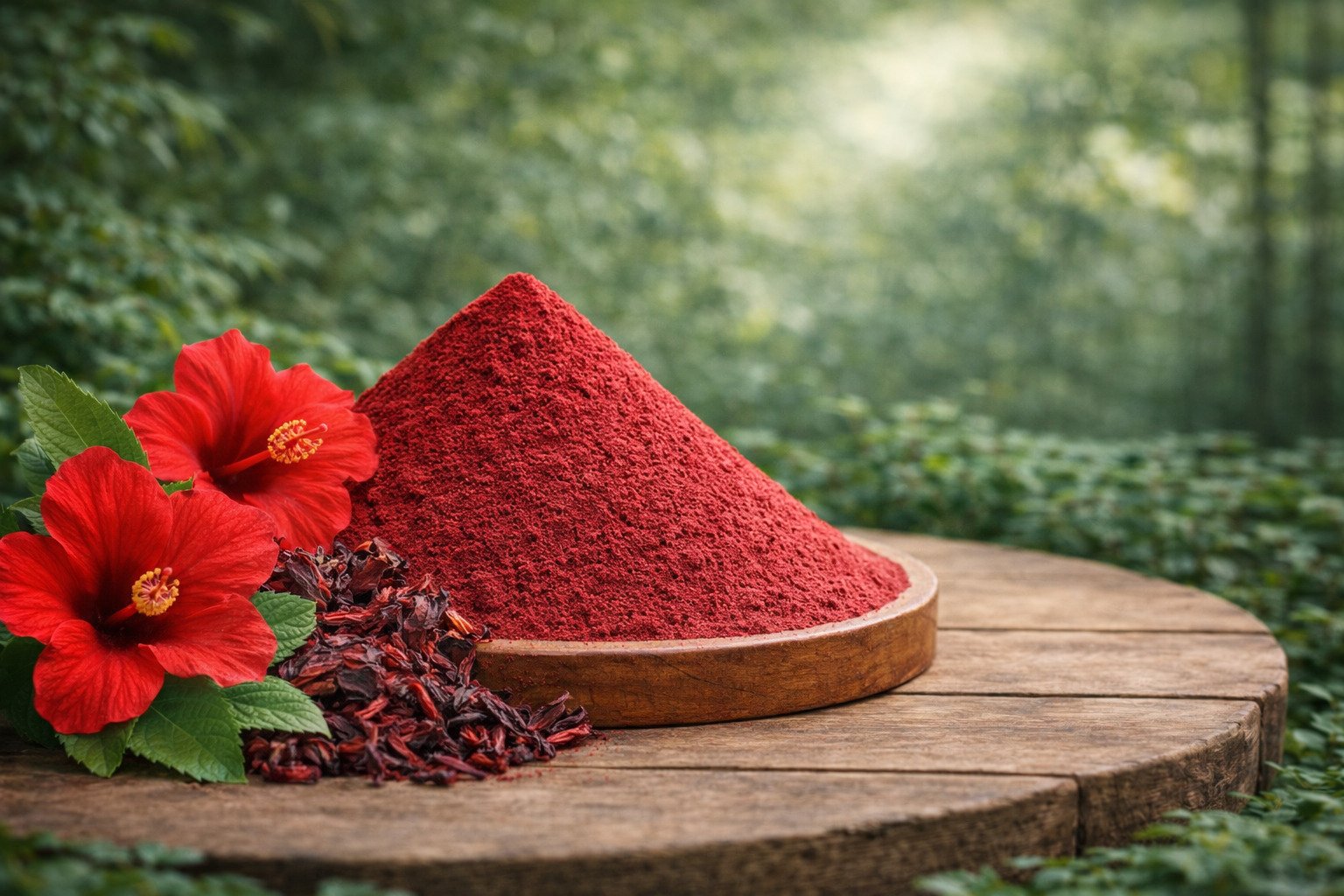
Hibiscus (Hibiscus sabdariffa) is a vibrant flowering plant traditionally consumed as whole dried petals in teas, beverages, and food preparations across Africa, Asia, the Caribbean, and Latin America. Historically, hibiscus has been used as a flower, not as a refined extract.
This guide explains:
- What Hibiscus flower is
- How it has been traditionally used
- What modern research focuses on
- Why organic hibiscus flower powder is not inferior to extracts
🌿 Shop the CalmEarth range → Browse our Fruit & Berry Superfoods collection and discover more from our full herbal range.
This content is for educational purposes only and does not provide medical advice.
What Is Hibiscus Flower?
Hibiscus flower products are typically made from the dried calyces/petals of Hibiscus sabdariffa. When gently dried and powdered, the flower naturally contains:
- Anthocyanins (natural pigments)
- Organic acids
- Polyphenols and flavonoids
- Vitamin-like plant compounds
- Natural fiber
These compounds occur together in the whole flower, creating hibiscus’s characteristic color, flavor, and botanical profile.
Traditional & Culinary Use of Hibiscus
Across cultures, hibiscus has been used as:
- Whole dried flowers steeped in water
- Powdered flower added to foods and drinks
- A natural coloring and flavoring agent
- A daily, food-adjacent botanical
Common traditional preparations include:
- Hibiscus tea (infusion/decoction)
- Fermented or chilled beverages
- Whole-flower culinary uses
👉 Whole-flower use is the traditional standard.
What Modern Research Has Studied
Modern research on hibiscus commonly evaluates:
- Whole flower preparations
- Aqueous infusions made from dried petals
- Food-based hibiscus powders
Whole-Flower & Food Research
A review in Food Chemistry examined the polyphenol and anthocyanin content of whole hibiscus calyces, highlighting the importance of minimal processing.
Botanical & Nutritional Studies
Research in Journal of Ethnopharmacology discussed hibiscus as a traditional food–botanical used in whole-flower form.
👉 Key Insight:
Hibiscus research aligns with whole-flower consumption, not isolated extract use.
Hibiscus Flower Powder vs Extracts (Critical Clarification)
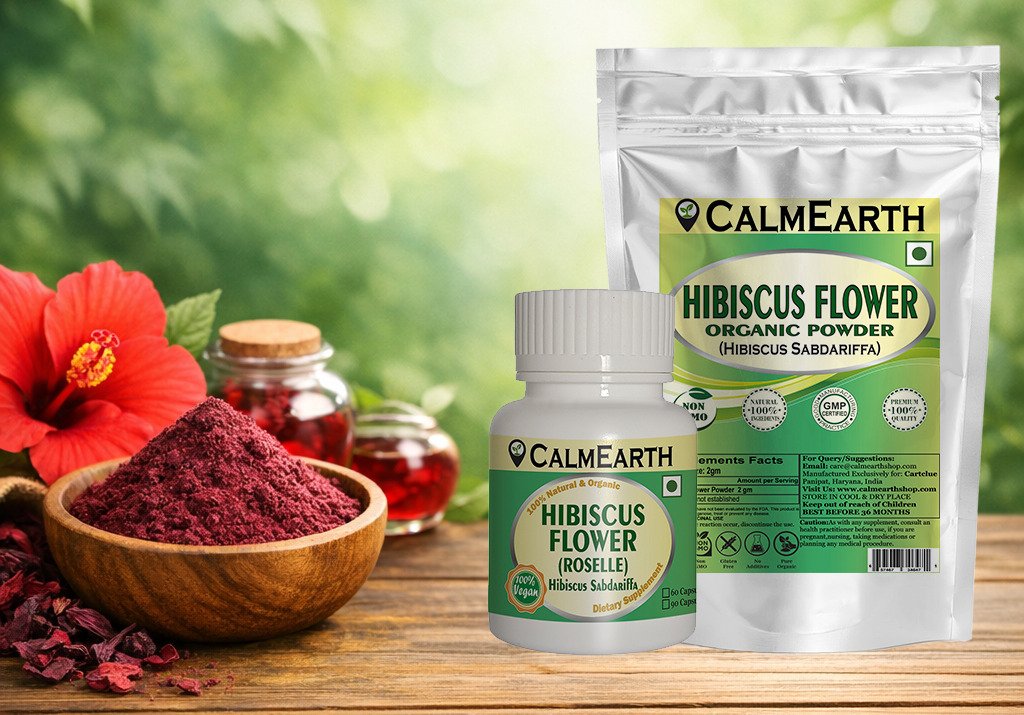
Organic Hibiscus Flower Powder
- Uses the entire dried flower
- Preserves natural pigments, acids, and polyphenols
- Matches traditional and culinary use
- Suitable for daily, long-term consumption
- 👉 View Hibiscus Flower Powder
- 👉 View Hibiscus Flower Capsules
Hibiscus Extracts
- Concentrate selected compounds only
- Remove fiber and flavor complexity
- Do not represent traditional hibiscus use
👉 Conclusion:
For hibiscus, organic whole-flower powder is the authentic, primary, and preferred format, not an inferior alternative.
Why Organic Matters for Hibiscus
Hibiscus flowers are:
- Consumed directly
- Used in food-like quantities
Organic sourcing ensures:
- No pesticide residues on petals
- Cleaner color and flavor profile
- Better suitability for daily use
Important Reminder
Scientific research studies foods and botanicals under controlled conditions.
Retail food supplements are not evaluated the same way.
Final Thoughts
Hibiscus is a flower-based food botanical, not a compound supplement.
Organic hibiscus flower powder preserves the plant’s natural color, flavor, and phytochemical integrity and aligns with traditional use, culinary practice, and modern research.
Compliance Disclaimer
This article is for educational purposes only.
It does not provide medical advice.
Dietary supplements are not intended to diagnose, treat, cure, or prevent any disease.