







Aloe Vera: Whole-Plant Use & Why Organic Powder Matters

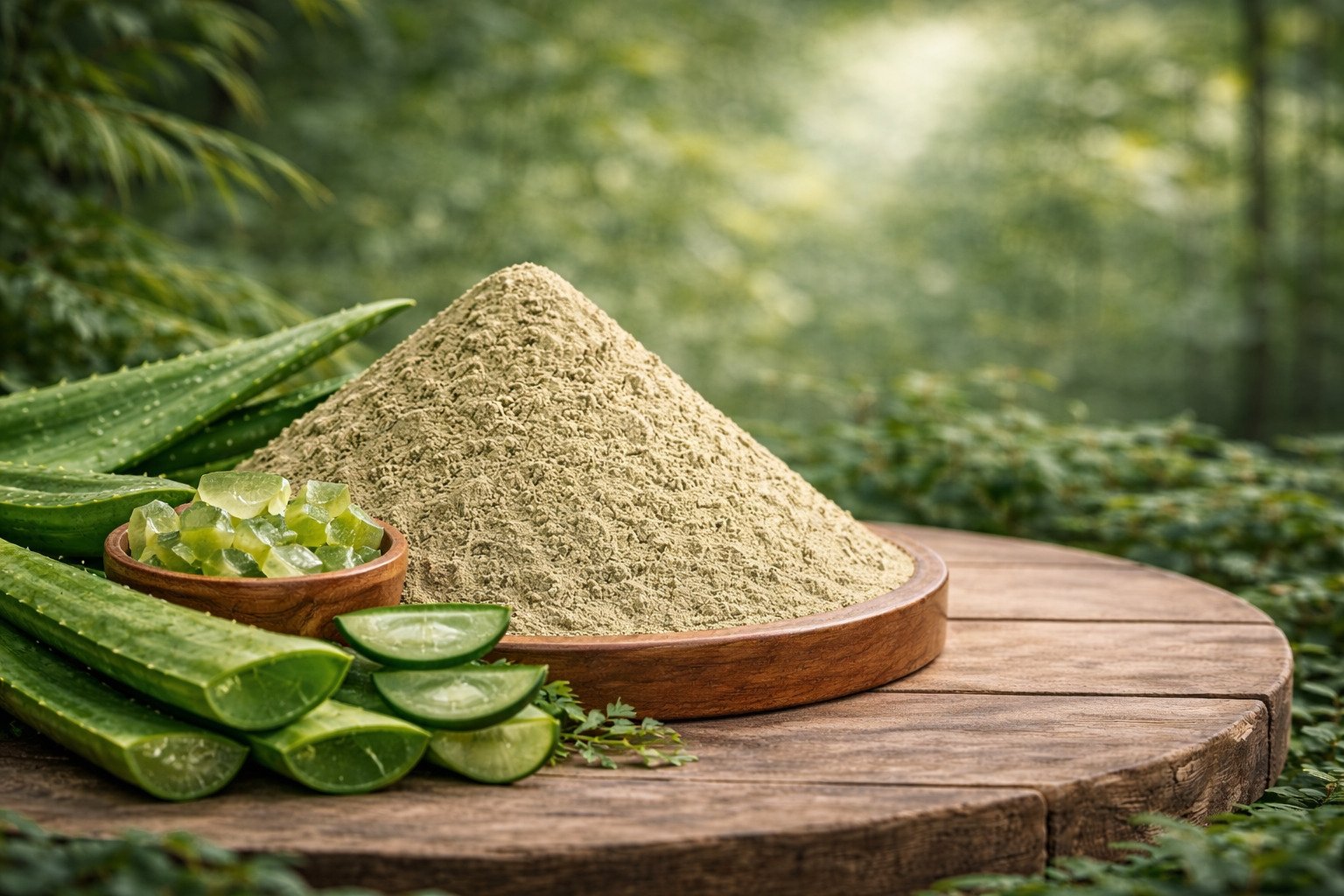
Aloe vera is a succulent plant that has been used for centuries across traditional systems as a whole leaf or inner leaf preparation. Historically, aloe was not consumed as a refined extract but as fresh gel, dried material, or whole-leaf preparations.
This guide explains:
- What Aloe vera is
- How it has been traditionally used
- What modern research focuses on
- Why organic aloe vera powder is not inferior to extracts
🌿 Shop the CalmEarth range → Browse our Hair & Skin collection and discover more from our full herbal range.
This content is for educational purposes only and does not provide medical advice.
What Is Aloe Vera?
Aloe vera is a perennial succulent whose thick, fleshy leaves contain a clear inner gel and supportive plant tissues.
Depending on processing, aloe powders may be derived from:
- Inner leaf gel
- Whole leaf (with outer rind removed or processed)
Naturally occurring components include:
- Polysaccharides (such as acemannan)
- Vitamins and minerals
- Amino acids
- Plant enzymes
- Phenolic compounds
These compounds occur together in the aloe leaf, forming a natural matrix.
Traditional Use of Aloe Vera
Across Ayurveda, traditional Chinese medicine, and folk herbal practices, aloe has been used as:
- Fresh inner leaf gel
- Dried aloe preparations
- Whole-leaf or inner-leaf powders
- Food-adjacent botanical preparations
Historically, aloe was consumed in minimally processed forms, not as isolated compounds.
👉 Whole-plant or whole-leaf use is the traditional standard.
What Modern Research Has Studied
Modern research on aloe vera often evaluates:
- Whole leaf preparations
- Inner leaf gel powders
- Broad-spectrum aloe materials rather than isolated compounds
Whole-Leaf & Polysaccharide Research
A review in Journal of Ethnopharmacology discussed aloe vera’s polysaccharide profile in whole-leaf and inner-leaf preparations.
Food & Botanical Research
Studies in Phytotherapy Research evaluated aloe vera as a botanical ingredient, emphasizing the importance of processing methods rather than isolated extraction.
👉 Key Insight:
Aloe research focuses on preserved polysaccharide structure, not extract isolation.
Aloe Vera Powder vs Extracts (Critical Clarification)
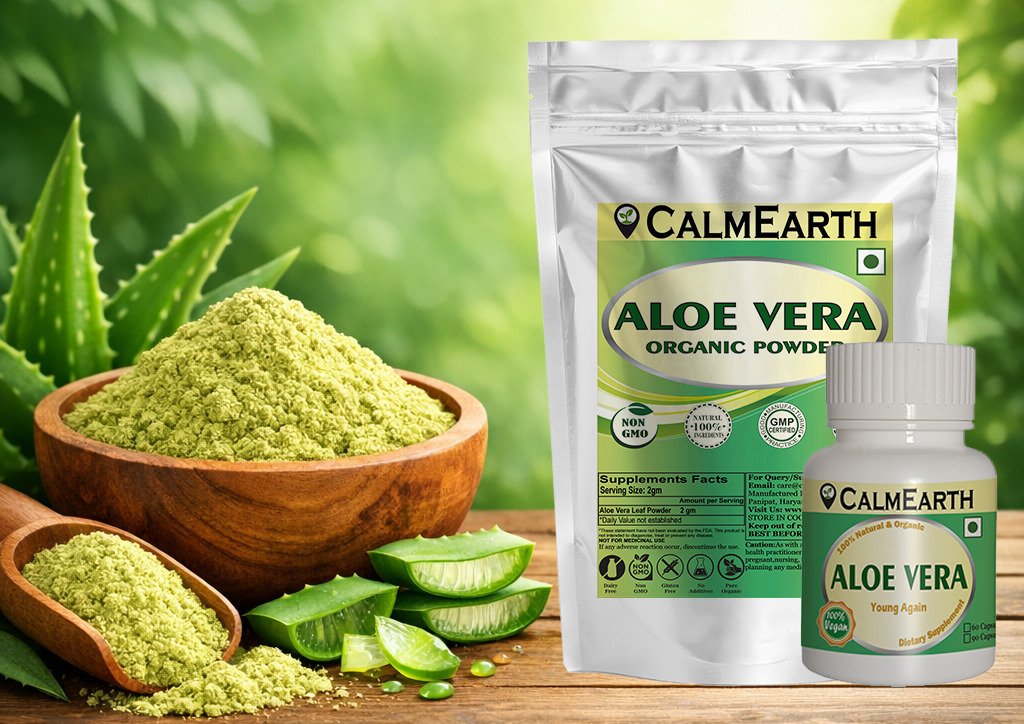
Organic Aloe Vera Powder
- Derived from whole leaf or inner leaf
- Preserves natural polysaccharide matrix
- Reflects traditional and food-based use
- Suitable for daily and long-term routines
- 👉 View Aloe Vera Powder
- 👉 View Aloe Vera Capsules
Aloe Vera Extracts
- Concentrate selected fractions only
- Often highly processed
- Do not represent traditional aloe consumption
👉 Conclusion:
For aloe vera, organic powder is the authentic, foundational format, not an inferior alternative.
Why Organic Matters for Aloe Vera
Aloe leaves are:
- Grown in soil for extended periods
- Sensitive to agricultural inputs
Organic sourcing ensures:
- No chemical residues
- Cleaner polysaccharide profile
- Better alignment with long-term botanical use
Important Reminder
Scientific research studies botanicals under controlled conditions.
Retail dietary supplements are not evaluated the same way.
Final Thoughts
Aloe vera is not a “compound supplement.”
It is a whole-plant botanical, traditionally consumed with minimal processing. Organic aloe vera powder preserves the plant’s natural integrity and aligns with traditional use and modern botanical research.
Compliance Disclaimer
This article is for educational purposes only.
It does not provide medical advice.
Dietary supplements are not intended to diagnose, treat, cure, or prevent any disease.