







Spirulina: Whole Algae Nutrition & Why Organic Powder Matters

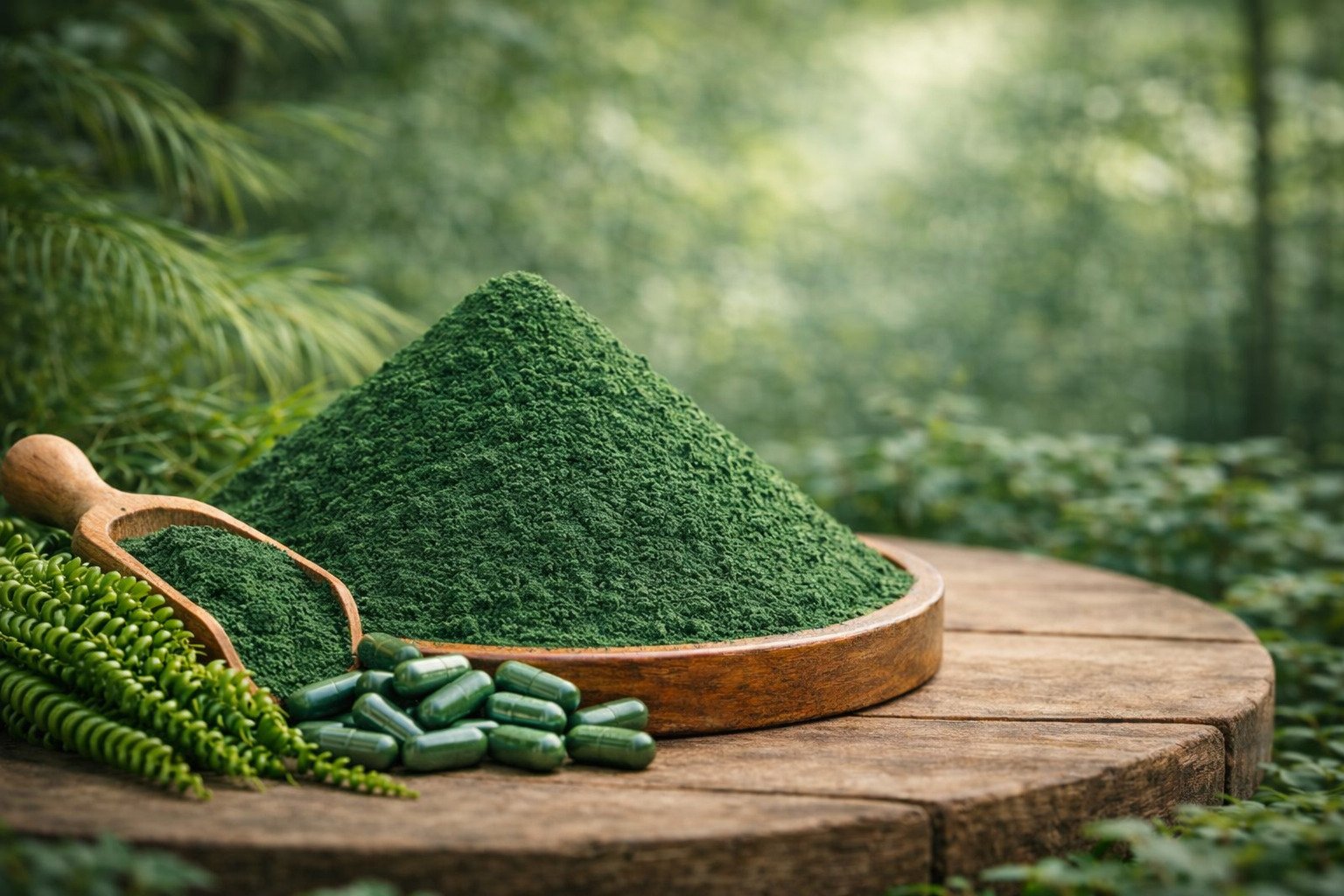
Spirulina is a nutrient-dense blue-green microalgae traditionally consumed as a whole dried biomass, not as an extract. Across nutrition science, functional foods, and traditional use, spirulina powder is the gold-standard format.
This guide explains:
- What Spirulina is
- How it has been traditionally and nutritionally used
- What modern research focuses on
- Why organic spirulina powder is not inferior to extracts
🌿 Shop the CalmEarth range → Browse our Green Superfoods collection and discover more from our full herbal range.
This content is for educational purposes only and does not provide medical advice.
What Is Spirulina?
Spirulina refers to dried biomass of edible microalgae, most commonly Spirulina platensis or Arthrospira species. It is cultivated in controlled freshwater environments and then harvested, dried, and powdered.
Spirulina naturally contains:
- Complete plant protein
- Phycocyanin
- Chlorophyll
- Essential amino acids
- Vitamins and minerals
- Natural antioxidants
These nutrients exist only together in whole spirulina, not in isolated form.
Traditional & Nutritional Use of Spirulina
Spirulina has been used historically and nutritionally as:
- A whole-food algae
- A dried powder added to foods and drinks
- A concentrated nutritional ingredient
- A daily green superfood
Historically and globally, spirulina has been consumed as:
- Dried powder
- Compressed tablets made from powder
👉 Whole biomass powder is the original and intended form.
What Modern Research Has Studied
Unlike many herbs, most spirulina research uses whole spirulina powder, not extracts.
Whole Biomass & Nutrition Research
A review in Journal of Applied Phycology discussed spirulina’s nutritional value based on whole dried biomass.
Source: Belay (2002). J Appl Phycol.
Functional Food Research
Research in Food Science & Nutrition evaluated spirulina powder as a functional food ingredient.
Source: Karkos et al. (2011). Food Sci Nutr.
Microalgae & Dietary Studies
A review in Nutrients highlighted spirulina powder in human dietary studies.
Source: Wu et al. (2016). Nutrients.
👉 Key Insight:
Spirulina research overwhelmingly supports whole-algae powder, not extract isolation.
Spirulina Powder vs Extracts (Critical Clarification)
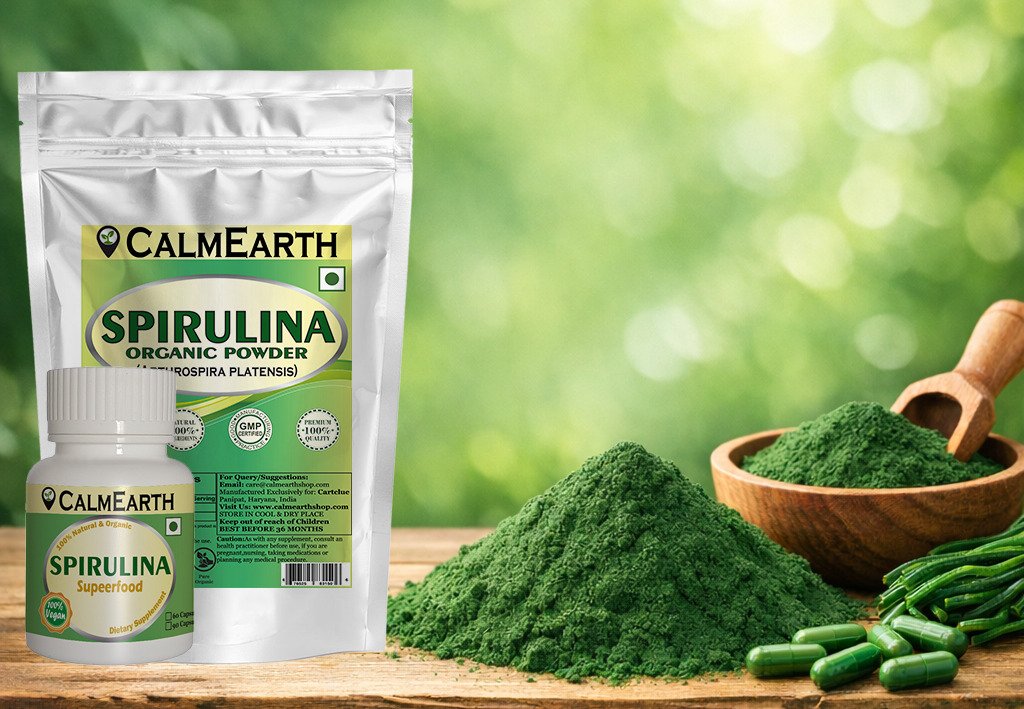
Organic Spirulina Powder
- Whole microalgae biomass
- Contains protein + pigments + minerals together
- Matches research and food-use formats
- Suitable for daily, long-term intake
- 👉 View Spirulina Herbal Powder
- 👉 View Spirulina Herbal Capsules
Spirulina Extracts
- Isolate single components (e.g., phycocyanin)
- Remove nutritional synergy
- Do not represent spirulina as a food
👉 Conclusion:
For spirulina, organic powder is the primary, complete, and superior nutritional form — not an inferior option.
Why Organic Matters for Spirulina
Spirulina absorbs nutrients directly from its growing medium.
Organic cultivation ensures:
- No synthetic chemicals
- Cleaner algae biomass
- Better purity and safety profile
For a daily-use superfood, organic quality is essential.
Important Reminder
Scientific research studies foods and botanicals under controlled conditions.
Retail dietary supplements are not evaluated the same way.
Final Thoughts
Spirulina is not a “compound supplement.”
It is a whole-food algae, designed to be consumed as a complete powder. Organic spirulina powder preserves its full nutritional integrity and aligns with both modern research and traditional food use.
Compliance Disclaimer
This article is for educational purposes only.
It does not provide medical advice.
Dietary supplements are not intended to diagnose, treat, cure, or prevent any disease.