








Triphala: Classical Ayurvedic Formula & Why Whole-Powder Matters

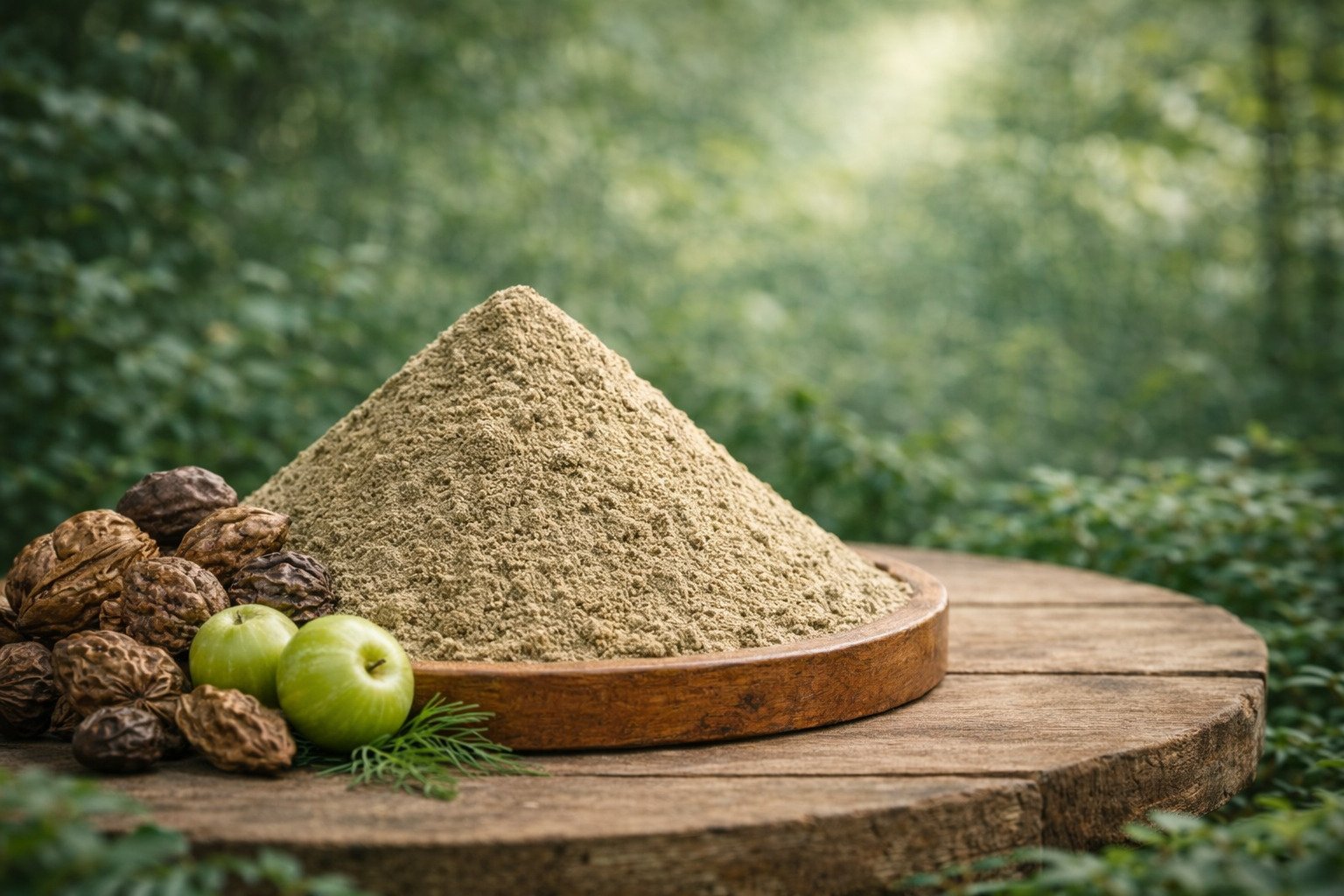
Triphala Organic Powder is one of the most revered formulations in Ayurveda. The name literally means “three fruits”, referring to a precise combination of:
- Amla (Emblica officinalis)
- Haritaki (Terminalia chebula)
- Bibhitaki (Terminalia bellirica)
For thousands of years, Triphala has been prepared and consumed primarily as a powder (churna). It is not an extract-driven formula in classical Ayurvedic texts.
This guide explains:
- What Triphala is
- How it has been traditionally used
- What modern research actually evaluates
- Why organic Triphala powder is not inferior to extracts
🌿 Shop the CalmEarth range → Browse our Digestive Wellness collection and discover more from our full herbal range.
This content is for educational purposes only and does not provide medical advice.
What Is Triphala?
Triphala is a balanced polyherbal formulation, not a single herb. Each fruit contributes a unique profile:
- Amla – rich in tannins and vitamin-like compounds
- Haritaki – valued for broad-spectrum botanical activity
- Bibhitaki – traditionally used for balance and purification
Ayurvedic texts emphasize that Triphala’s effectiveness depends on the synergy of all three fruits in whole form, not isolated constituents.
Traditional Use of Triphala
In Ayurveda, Triphala is classified as a Rasayana formulation and has been traditionally used as:
- A daily churna (powder)
- A decoction prepared from powder
- A long-term foundational herbal formula
- A gentle, food-adjacent botanical blend
Historically, Triphala has been consumed as:
- Powder mixed with warm water
- Powder taken before sleep
- Powder incorporated into classical formulations
👉 Whole-powder use is the classical standard.
What Classical Texts Emphasize
Ayurvedic texts such as:
- Charaka Samhita
- Sushruta Samhita
- Ashtanga Hridayam
all describe Triphala in powdered or decoction form, not as extracts.
The ratio, balance, and whole-fruit integrity are considered essential.
What Modern Research Has Studied
Modern studies on Triphala frequently use:
- Whole Triphala powder
- Aqueous preparations derived from powder
Polyherbal & Whole-Formula Research
A review in Journal of Alternative and Complementary Medicine evaluated Triphala as a polyherbal formulation, emphasizing whole-fruit synergy.
Source: Peterson et al. (2017). J Altern Complement Med.
Ayurvedic & Botanical Reviews
Research in Ayurveda Research and Practice highlighted Triphala churna as the classical and most studied format.
Source: Baliga (2010). Ayurveda Res Pract.
Botanical Synergy Studies
A review in Phytotherapy Research emphasized that Triphala’s effects cannot be attributed to a single compound.
Source: Srikumar et al. (2007). Phytother Res.
👉 Key Insight:
Triphala research supports whole-formula synergy, not extract isolation.
Triphala Powder vs Extracts (Critical Clarification)
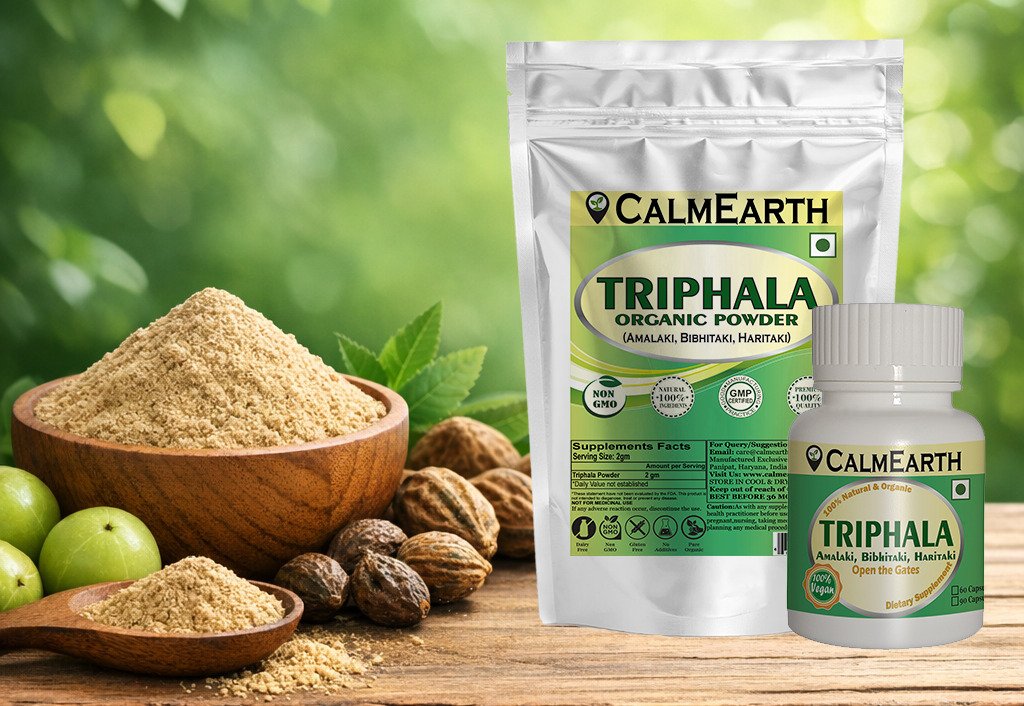
Organic Triphala Powder (Churna)
- Uses whole dried fruits
- Preserves classical Ayurvedic ratios
- Reflects traditional and research-aligned use
- Suitable for daily, long-term routines
- 👉 View Triphala Organic Powder
- 👉 View Triphala Organic Capsules
Triphala Extracts
- Isolate selected compounds only
- Alter the classical formulation balance
- Do not represent traditional Triphala use
👉 Conclusion:
For Triphala, organic whole-powder is the authentic, primary, and preferred format, not an inferior alternative.
Why Organic Matters for Triphala
Triphala is often used:
- Daily
- Long-term
- In food-adjacent quantities
Organic sourcing ensures:
- No pesticide residues on fruit skins
- Cleaner tannin and polyphenol profile
- Better long-term suitability
Important Reminder
Scientific research studies herbs under controlled conditions.
Retail dietary supplements are not evaluated the same way.
Final Thoughts
Triphala is not a “single-compound supplement.”
It is a classical Ayurvedic formulation, designed to be consumed as a whole-fruit powder. Organic Triphala powder preserves the integrity, balance, and intent of this timeless formula.
Compliance Disclaimer
This article is for educational purposes only.
It does not provide medical advice.
Dietary supplements are not intended to diagnose, treat, cure, or prevent any disease.