








Bitter Melon (Momordica charantia): Traditional Use, Research & Extract Ratio

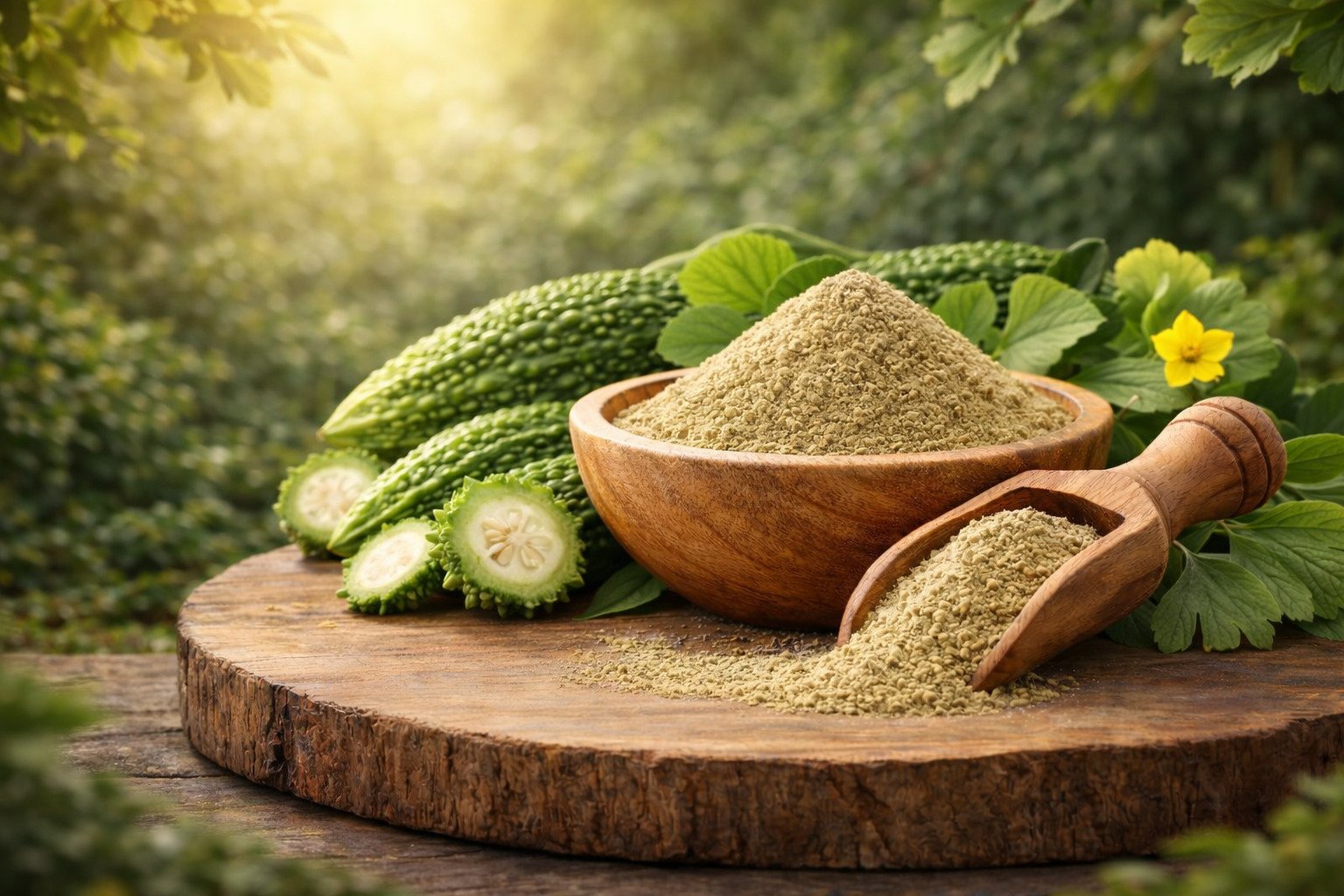
Bitter Melon, also known as Karela, is the fruit of Momordica charantia, a climbing plant traditionally used across Asia, Africa, and the Caribbean. In modern botanical preparations, Bitter Melon is commonly processed into ratio extracts, such as 12:1, to concentrate its naturally occurring plant compounds.
This guide explains:
- What Bitter Melon is
- How it has been traditionally used
- What modern research has studied
- What a 12:1 extract ratio means
🌿 Shop the CalmEarth range → Browse our Fruit & Berry Superfoods collection and discover more from our full herbal range.
This content is for educational purposes only and does not provide medical advice.
What Is Bitter Melon (Momordica charantia)?
Bitter Melon is a tropical vine whose fruit is used in culinary and botanical traditions. The fruit naturally contains:
- Charantin
- Polypeptides
- Alkaloids
- Flavonoids
- Saponins
In ratio extracts, the focus is on concentrating the full-spectrum plant material, rather than isolating a single compound.
Traditional Use of Bitter Melon
In Ayurveda, Traditional Chinese Medicine, and folk traditions, Bitter Melon has been included in practices related to:
- Metabolic balance traditions
- Digestive wellness traditions
- Seasonal wellness practices
- General botanical formulations
These traditional applications led to extensive interest in Bitter Melon as a botanical ingredient.
What Modern Research Has Studied
Modern research on Momordica charantia has explored both whole fruit preparations and extracts.
Phytochemical Research
A review in Journal of Ethnopharmacology discussed the chemical constituents of Bitter Melon fruit, including charantin and related compounds.
Source: Grover & Yadav (2004). J Ethnopharmacol.
Botanical & Experimental Studies
Research in Phytotherapy Research examined Bitter Melon extracts under controlled experimental conditions.
Source: Joseph & Jini (2013). Phytotherapy Research.
Nutritional & Botanical Reviews
A review in Food Chemistry evaluated the nutritional and phytochemical composition of Momordica charantia.
Source: Jia et al. (2017). Food Chemistry.
These studies were conducted using controlled preparations, not retail dietary supplements.
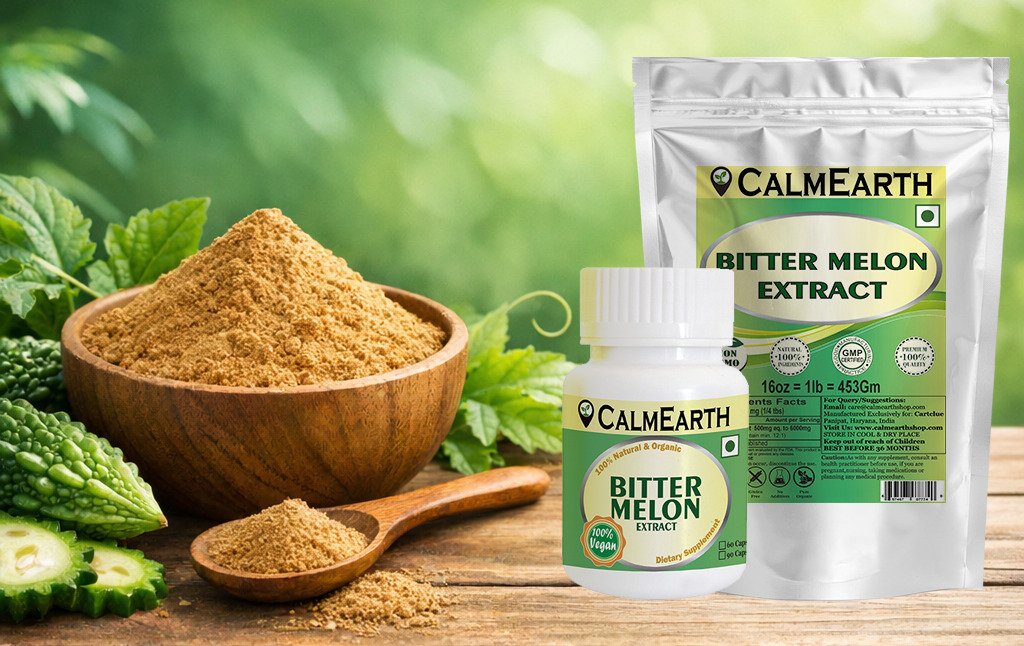
Bitter Melon Extract Ratio (12:1)
A 12:1 extract means that 12 parts of Bitter Melon fruit are used to produce 1 part of extract.
This ratio extract:
- Concentrates the full-spectrum plant material
- Maintains the natural phytochemical balance
- Provides a more potent botanical ingredient than raw powder
- 👉 View Bitter Melon Extract Powder 12:1
- 👉 View Bitter Melon Extract Capsules 12:1
Why Ratio Extracts Matter
Ratio extracts are widely used when:
- Multiple plant compounds contribute to value
- Whole-spectrum concentration is preferred
- Single-compound standardization is not required
They allow:
- Consistent extract strength
- Reliable formulation
- Clear differentiation from raw fruit powder
Important Reminder
Scientific research studies botanical extracts under controlled conditions.
Retail dietary supplements are not evaluated in the same way.
Final Thoughts
Bitter Melon (Momordica charantia) remains a widely used fruit-based botanical across traditional and modern practices. Ratio extracts such as 12:1 offer a concentrated form while preserving the plant’s natural phytochemical profile.
Compliance Disclaimer
This article is for educational purposes only.
It does not provide medical advice.
Dietary supplements are not intended to diagnose, treat, cure, or prevent any disease.